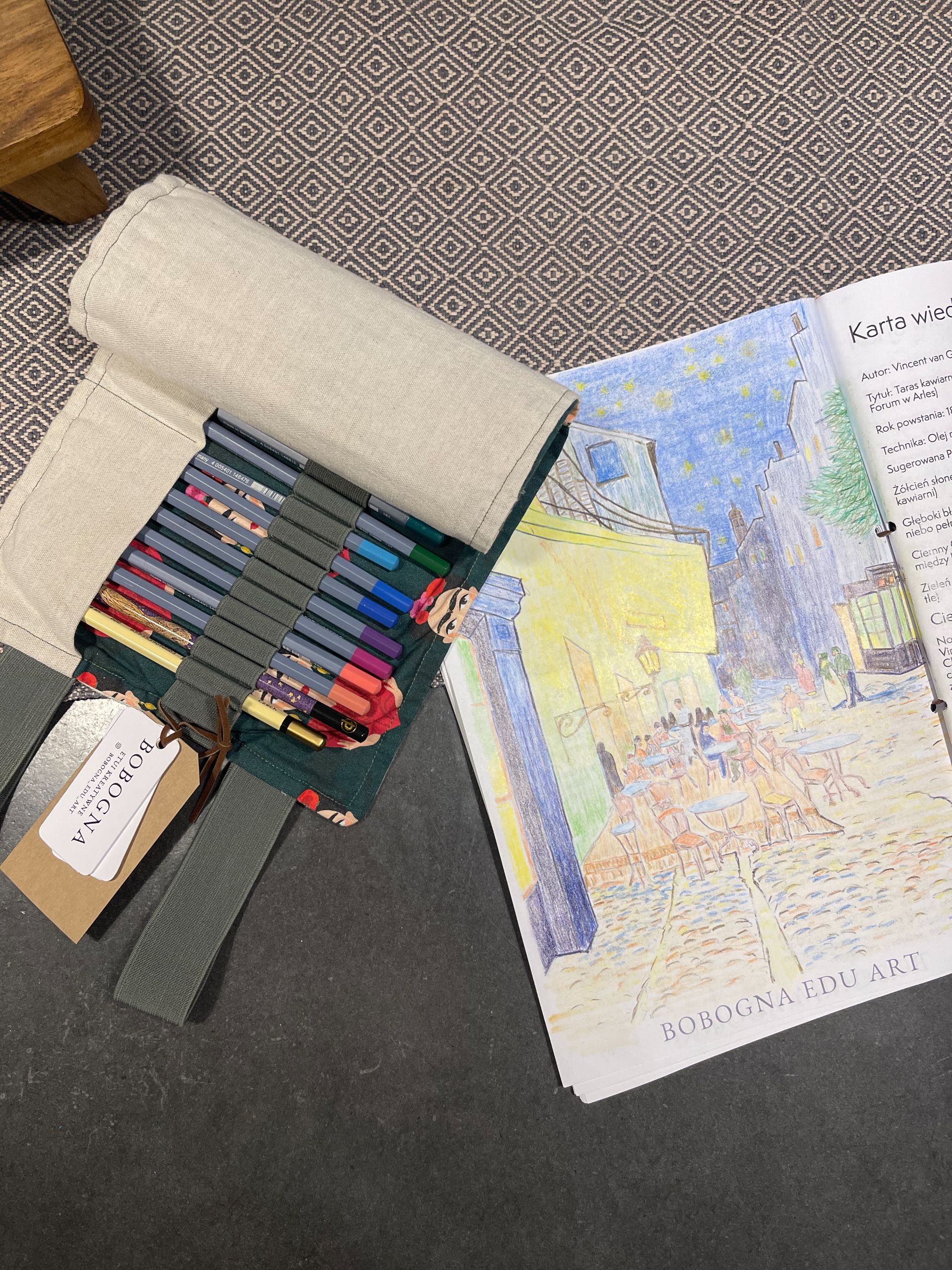
When you're standing in front of a shelf full of pencils and have absolutely no idea where to start
The cheapest ones cost next to nothing, the most expensive ones can set you back a small fortune. Watercolor, oil-based, graphite, pastel — every package promises something different. And that's exactly when the feeling hits: joyful excitement mixed with a touch of panic. Which ones do you choose?
So what's actually the difference between art pencils and the ones from school?
Before we get into the different types, it's worth pausing at one fundamental question: what is it that makes me want to draw? The answer lies in what's inside the core. School pencils — the ones we all remember from childhood — contain relatively little pigment and a lot of filler: cheaper substances that add bulk but not color intensity. Art pencils flip those proportions. More pigment, less filler, and sometimes additional binding agents that give the core its distinctive character. Drawing with an art pencil gives you color that's deep and rich. That same line drawn with the cheapest school pencil will come out pale and uneven, and layering more color on top won't help much. For someone just starting out with painting or coloring, this difference really matters — because vibrant, beautiful color immediately rewards your effort and encourages you to keep going.
I'm not saying cheap pencils are bad. They have their place — they work well for children learning to hold a pencil, for school, for early drawing adventures. But if you're dreaming of adult coloring books, sketching portraits, or illustrating your own notebooks, it's worth investing just a little more.
Price versus quality — where does the sensible line fall?
This brings us to the question that comes up most often: do I really have to spend a fortune to draw well? Thankfully, no. The art pencil market can be loosely divided into three price tiers, and each one makes sense in its own way.
Budget tier — this includes pencils from brands like Faber-Castell or Renesans. A set of twelve or twenty-four pencils costs somewhere between a modest amount and not very much at all. The quality is noticeably better than school-grade, the color fills the paper beautifully, and for learning and everyday mindful drawing practice, they work really well.
Mid-range tier — here you'll find pencils that are the real deal. Faber-Castell Polychromos, Derwent Coloursoft. The pigment is noticeably richer and the pencils glide across paper like velvet. A set of twelve typically costs somewhere between fifty and a hundred and fifty złoty. For someone who genuinely wants to develop their creativity, this investment pays off quickly — because working with good materials is simply more enjoyable and keeps you coming back for more.
Premium tier — these are pencils for advanced artists and professionals. Caran d'Ache Luminance. Here, a single pencil can cost more than twenty złoty, and a set of a hundred and twenty colors is a considerable expense. The pigment is so intense and creamy that layering colors feels like working with oil pastel. Gorgeous, but definitely not a first step. Although — maybe it's worth buying just one in your favorite color and trying it out? That's a mindfulness practice in itself.
Watercolor pencils — when drawing becomes painting
This is where I get to talk about my favorites: watercolor pencils. They bring together something familiar and accessible — drawing with a pencil — and something truly magical: just run a wet brush over a line you've drawn, and the color blooms and flows like watercolor.
Watercolor pencils have a core enriched with water-soluble pigments. You can use them dry, just like regular pencils, and get a lovely, saturated drawing. Or you can wet your brush and blend the color — the lines transform into soft, transparent washes of color, almost like painting with watercolor. You can also work on wet paper, laying down the pencil directly and watching the color spread on its own. Each technique gives a completely different result.
For someone who wants to start painting but feels intimidated by watercolor and brushes, watercolor pencils are the perfect bridge: the control of a pencil with the freedom of paint. I especially recommend them for anyone who enjoys coloring as a form of mindfulness and meditation — because working with water slows you down, invites you to observe, and helps you truly savor the process.
Instead of a summary — an invitation
Choosing colored pencils doesn't have to be a perfect decision. It can simply be the first step into a beautiful, long adventure — one where you'll make mistakes, experiment, and gradually discover your favorite brands and techniques. You might start with the most affordable set of watercolor pencils and a wet brush, or you might go straight for something a little better quality. Maybe you'll build your own personal set, choosing individual shades one by one — because the best pencil is simply the one you're actually holding in your hand and genuinely want to use.