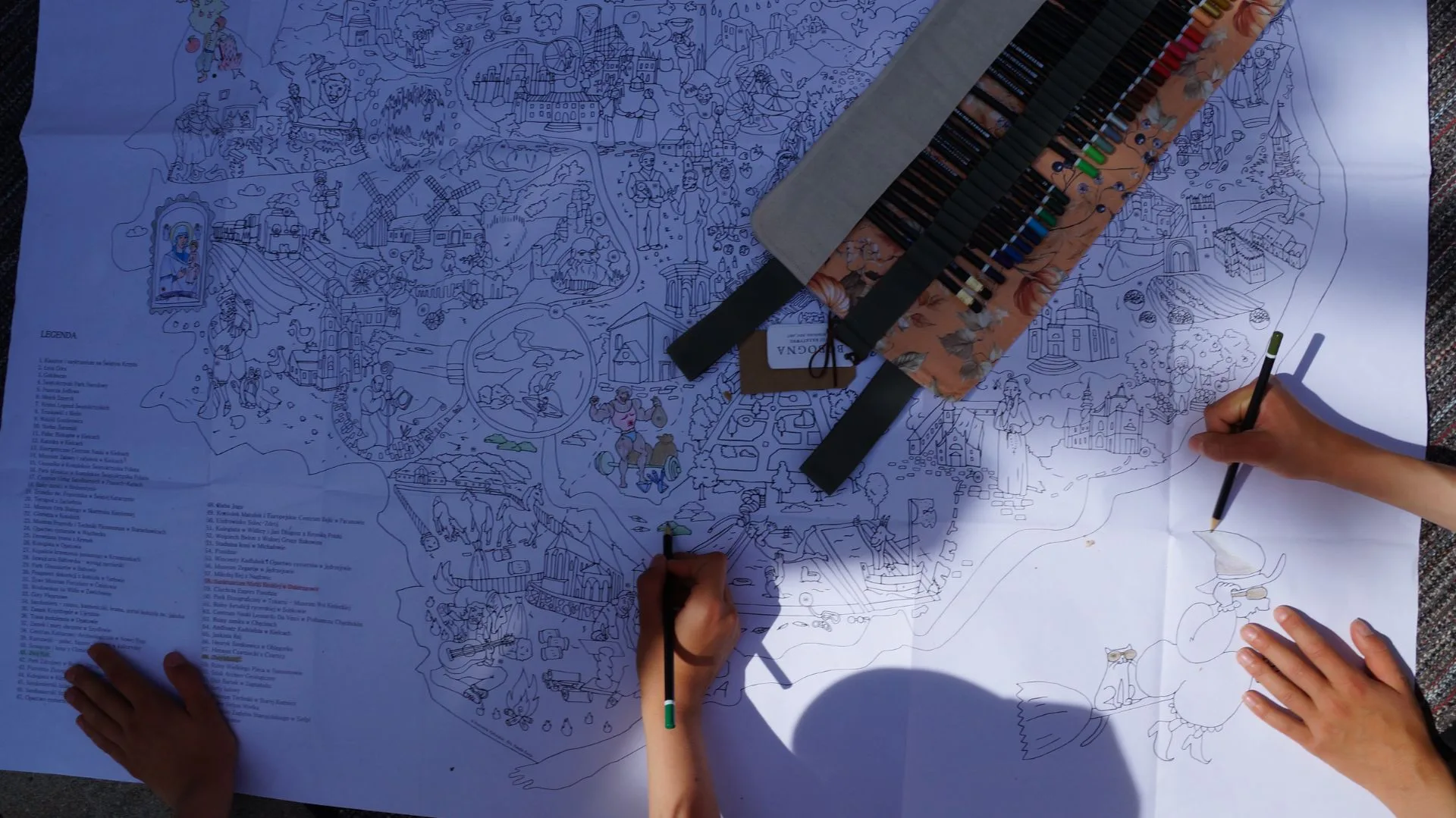
There are moments when a child simply can't say what they're feeling. They stand there with clenched fists, eyes full of tears, or they run off and refuse to talk. And instead of asking "what happened?" one more time, you can simply hand them a piece of paper and some crayons. Sometimes that's all it takes for an emotion to find its way out — through color, through a line, through the movement of a hand.
Why Art Works Where Words Fall Short
Up until around age seven, children think in images before they think in concepts. As they move into school age and the teenage years, their emotions become increasingly complex — yet the language they have to describe those feelings often lags behind what they actually experience. That's where the sudden outbursts come from, the silence, the retreating behind a closed door.
Art bypasses that blockage. It doesn't ask a child to first understand what they feel and then express it. It works the other way around — express first, understand later. That's why psychologists have long reached for creative techniques when working with children who've been through difficult experiences.
What Neuroscience Tells Us
When a child draws, both hemispheres of the brain are activated at once — the emotional and the analytical. A bridge is formed. A feeling that had been circling through the body as tension finally takes on a shape. And once something has a shape, it can be seen, named, and — eventually — released. It can also be met with a parent's support.
The Malort Studio and the Wisdom of "Just Make"
At the Malort studio founded by Arno Stern, children paint in silence. There's no theme, no evaluation, no exhibition at the end. Stern called it "Formulation" — a natural human need to leave a mark, regardless of whether anyone praises it afterward. Maria Montessori's pedagogy carries a similar spirit: a child doesn't create for us. They create for themselves.
It's a quietly revolutionary idea in a world where the first response to a drawing brought home from school is usually: "lovely, but what is it supposed to be?" Instead, you might say: "tell me about it." Or say nothing at all — just sit down beside them and start drawing too. If you're not sure how to begin, it's worth remembering that creating without skill is not only possible, but sometimes the most beautiful thing of all.
Stress-Relief Coloring — for Children Too
We tend to talk about stress-relief coloring books in the context of adults, but older children, teenagers, and even younger kids benefit from them enormously. The rhythm of filling in shapes, choosing colors, having control over what happens on the page — all of it lowers tension. For a child who's had a hard day at school, ten minutes with a good set of crayons and a favorite coloring book can be more effective than any conversation.
It's worth investing in a first proper set of artist's crayons — ones that don't snap, glide smoothly, and offer rich, vivid color. A cheap crayon that barely leaves a mark is frustrating. A good one is an invitation to stay at the table just a little longer.
A Pencil Case That Belongs to the Child
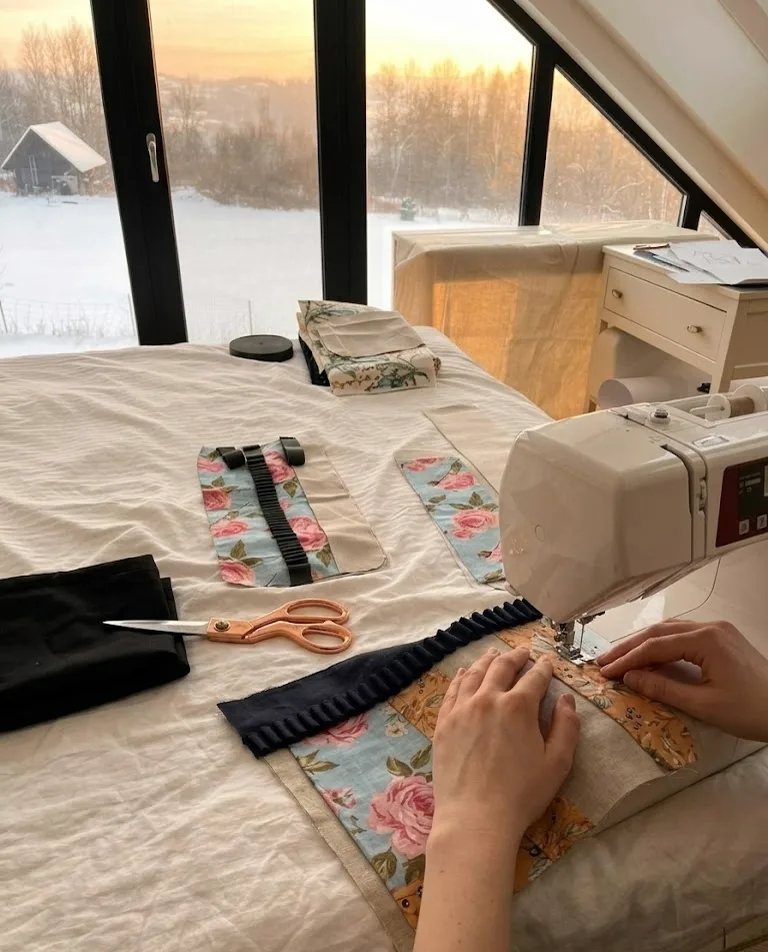
Children need their own things. Things that are accessible and easy to use. Not borrowed, not shared, not "careful, that's Mum's." A small, hand-sewn pencil case where everything has its place teaches children to respect their tools and gives them a sense of agency. It's a small thing, but children feel it. Bobogna cases are made with exactly this in mind — the belief that art supplies deserve a proper home, and that a child deserves something that's truly theirs.
The Time That Stays
But the most precious thing in all of this isn't any tool or technique. It's time. Half an hour in which a parent sits beside their child and does something the child loves. No phone, no "five more minutes and we're done." Just presence, a pencil, a piece of paper. Over time, this practice becomes something more — a shared language to return to when words run dry again. And perhaps that's where the greatest power of art lies: not in what ends up on the page, but in what remains between people when they create something together.