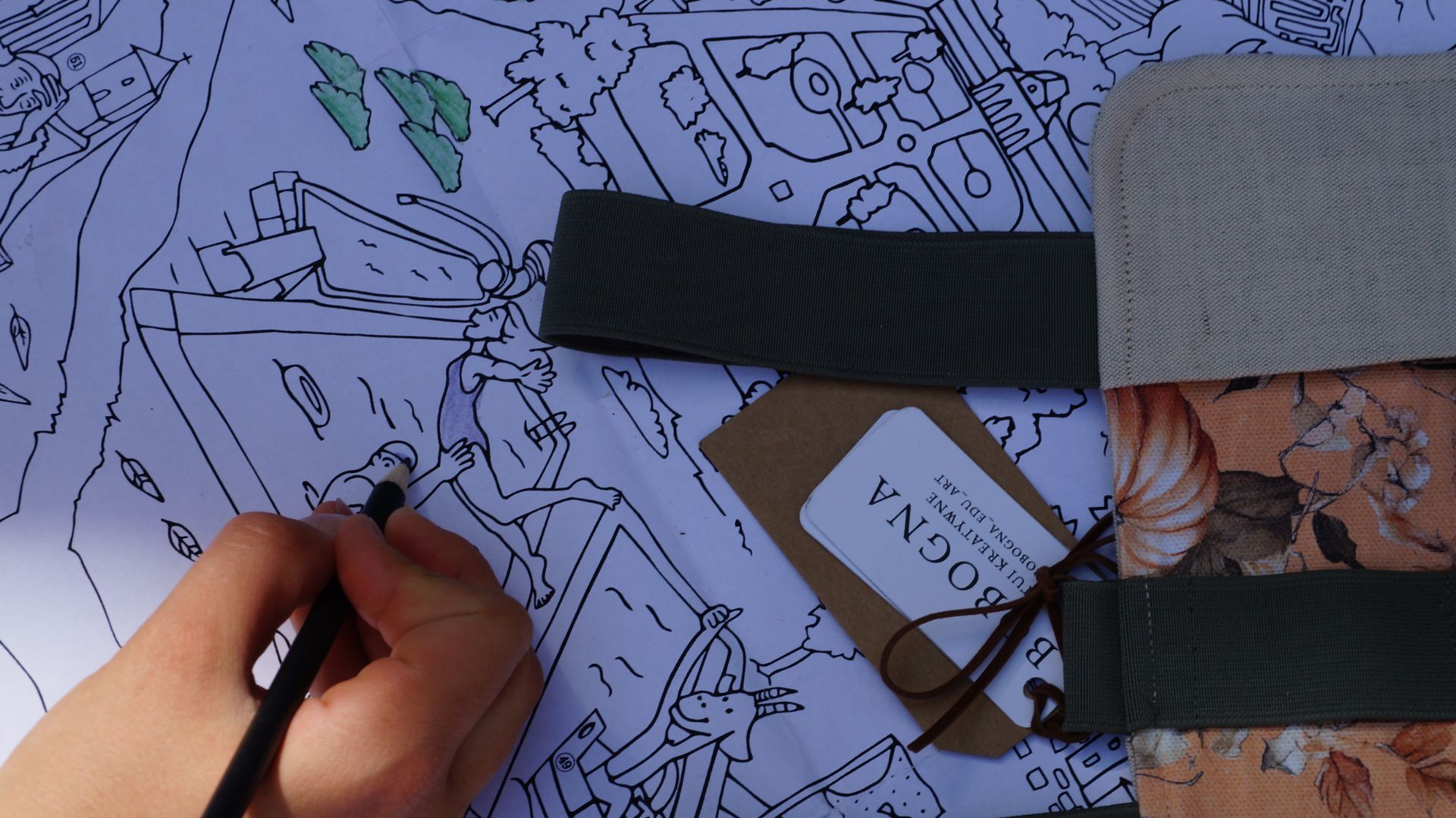
Before we started creating our own coloring books, we spent years searching for the perfect ones — beautiful, moving, not too easy and not too hard, and of course, the paper had to be just right. It's not as simple as it sounds, finding one that makes you want to sit and color for hours, rather than just start a single drawing and leave it there.
Coloring books are for everyone — but not every coloring book is for you
Before you start looking, it's worth taking a moment to think about what you actually need. The choice of coloring books is enormous, and they're usually divided into those for children and those for adults. Though personally, I'd break them down into four categories:
- coloring books for young children
- coloring books for teenagers
- coloring books for adults
- universal coloring books
It's not just about difficulty level — it's about the whole experience: the paper, the intricacy of the designs, the themes, even the page format.
Coloring books for children
should be simple, bold, and resilient enough to handle slightly less gentle treatment. Though in my opinion, simple doesn't mean cheap or careless. Thick outlines, large areas to fill in, familiar motifs — favorite animals, fairy-tale characters, vehicles, nature — all of that is wonderful, but what really matters is following the child's lead, listening to what they find interesting. Often it's the same things that interest us too, and that's where you find a shared space to spend time together. I wholeheartedly recommend everything from the wonderful family publisher Usborne.Coloring books for teenagers
offer more detail — but just the right amount that a frequently distracted teenage mind will actually embrace. There needs to be a balance between challenge and a sense of accomplishment: harder, but not too hard. The themes popular among teenagers matter too — fantasy, manga — it's worth asking what subjects your teenager is actually into. In our testing, Camilla D'Errico's coloring books worked beautifully. You'll find our recommended coloring books for teenagers right here.Coloring books for adults
present an even greater challenge. If you're just starting out, read our complete guide to adult coloring — it covers tools, rituals, and how to choose your first coloring book. To find something that will truly draw you in, it's worth spending a quiet moment thinking about the theme — what moves me right now, what feels beautiful to me, what brings me a sense of calm. This is where real symbolism has its place. They're often called — anti-stress coloring books. Bookshop shelves are overflowing with options for adults — mandalas, botanical illustrations, architecture, patterns inspired by the art of various cultures — but what matters most is choosing a theme that resonates with you, not one that simply happens to be fashionable.You'll find some truly inspiring coloring books here.
And here as well — some of the most beloved coloring books for adults around.
Universal coloring books
are my personal favorite. Years ago, we managed to find a beautiful, oversized coloring book in Siena — so many pages, varied levels of difficulty, illustrations that were both inspiring and deeply symbolic. That coloring book is still with my daughters to this day; even after all these years, we keep coming back to it. Well-chosen, varied illustrations printed on quality paper — this is a coloring book that can be a years-long investment, one that invites intergenerational conversation and connection. I managed to track down this particular coloring book on the Italian Amazon.What to look for when choosing a coloring book?
Paper weight and quality — it makes all the difference
For dry techniques — colored pencils — paper with a weight of 80–100 g/m² is perfectly fine. If you want to color with gel pens or alcohol markers, however, look for paper weighing at least 120 g/m², and ideally 160 g/m² or more. Paper like this won't buckle under moisture and won't bleed through to the other side.
Also check whether the pages are printed on one side only. In many quality adult coloring books, each illustration occupies just one page, with the back left blank or minimally printed — precisely so you can use more intensive coloring techniques. That said, it's worth remembering that for mindfulness practice, we don't need intensive techniques at all — colored pencils are more than enough. Still, it's worth having paper thick enough to stand the test of time and hold up to a few layers of color.
Theme — because your coloring book should feel like you
- Botanical and nature — flowers, leaves, mushrooms, forests; probably the most popular direction among adults
- Mandalas and geometric patterns — wonderful for meditation and focus
- Architecture and cities — coloring the facades of townhouses, cathedrals, oriental palaces — among my personal favorites
- Art inspired by world cultures — Celtic, Japanese, Native American, Scandinavian patterns
- Animal illustrations — from realistic portraits of wild animals to fantastical creatures
- Fashion illustrations and portraits
- Reproductions of artworks
Choose a theme that genuinely pulls at you — because that's what will keep drawing you back to your pencils and make it that much easier to put the phone down.
Where to buy good coloring books?
Brick-and-mortar and online bookshops
This is still the best place to buy coloring books in book form. Good bookshops carry offerings from well-known publishers — both local and international. I highly recommend the artists mentioned above, and for children, Usborne coloring books are a wonderful choice. I've included links to the artists who create these coloring books, but most of them are also available at Empik or on Amazon. For the highest paper quality, your best bet is an art supply store.
When buying online, always check the specifications: paper weight, number of pages, size of illustrations. There should be two or three photos showing example pages from inside. Reading other people's reviews is always worth the time.
Do Biedronka and Action carry coloring books?
This question comes up surprisingly often — and the answer is: yes, sometimes. Biedronka regularly introduces seasonal and themed products, and coloring books — especially for children — tend to appear around holidays, the start of the school year, or summer. Much the same goes for Action.
The catch is that the selection at discount stores tends to be unpredictable and short-lived. The paper in those coloring books is rarely high quality — it's usually standard offset paper with a low weight, which won't hold up well with markers or even intensive pencil layering. For children just beginning their coloring adventure, it might be a nice little activity for the moment — but certainly not a source of inspiration for years to come.
Printable coloring pages — a free and convenient alternative
Printable coloring pages are hugely popular right now — and it's easy to see why. You simply visit the right website, download a PDF, and print.
If you use printable coloring pages regularly, it's worth investing in good printer paper — at least 100 g/m², and ideally 120 g/m².
How you organize your supplies makes an enormous difference
If your colored pencils are rattling around loose in a drawer or crammed into a small pouch, it's hard to feel inspired to start. Just setting everything up takes time — and so we procrastinate.
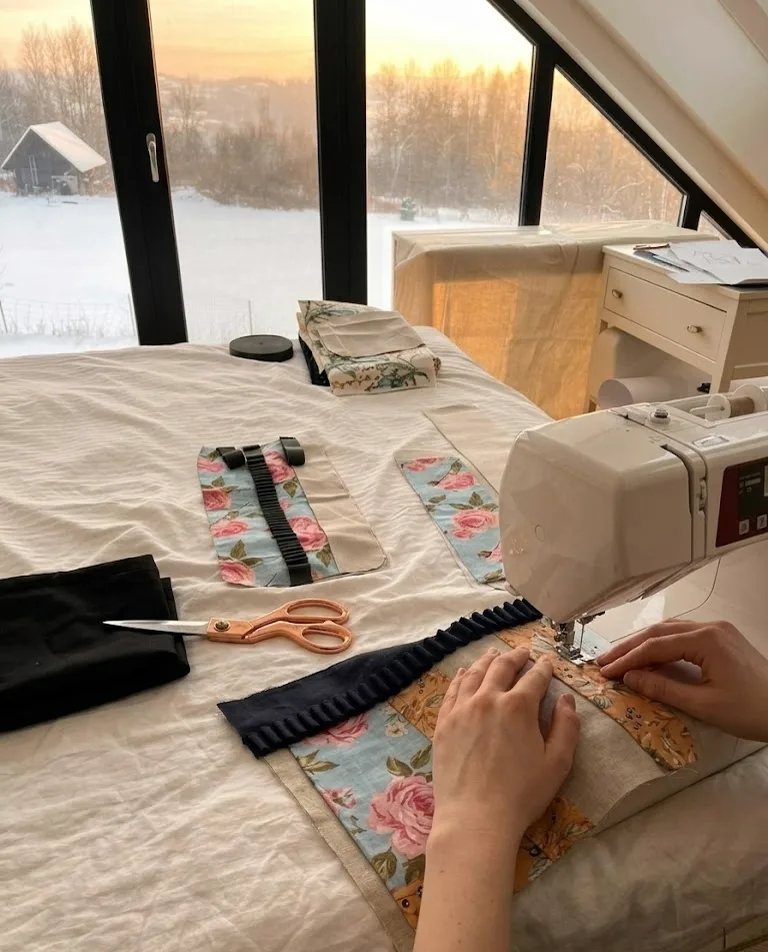
An art supply case — like the ones we hand-sew here at Bobogna — isn't just a matter of aesthetics. It's a matter of creating the right space for an experience. When your tools have a home, and your case is sitting elegantly on your desk — or maybe on your bed — the threshold for stepping into a creative moment is incomparably lower. You sit down, open the case, pick up your favorite pencil — and you create.
A quick summary — what's worth keeping in mind
The best coloring book is the one you actually want to come back to.