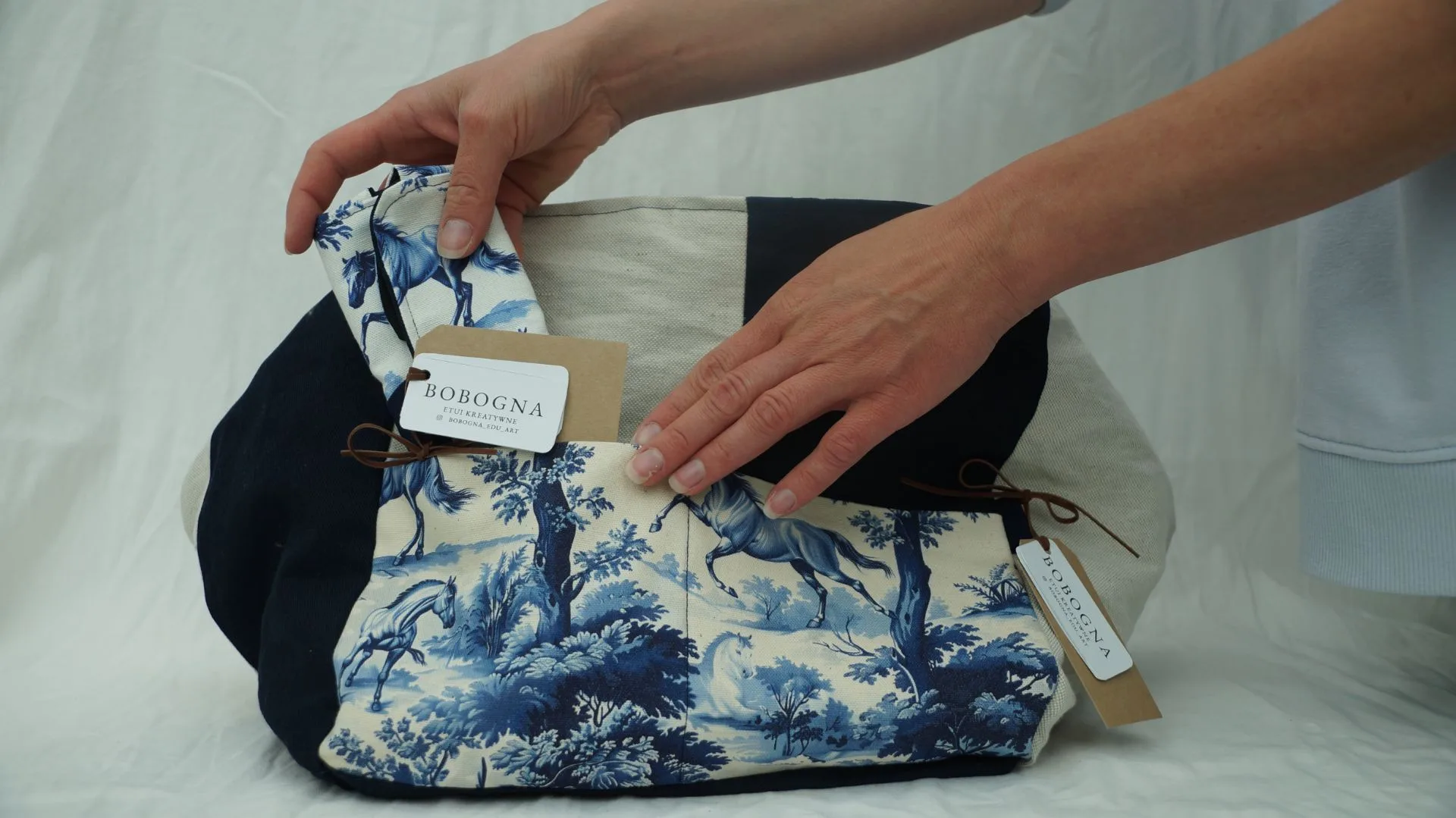

Mist over the ponds, ladies in gowns adorned with delicate monochromatic patterns — shepherdesses, horses, deer, ancient ruins. This is toile de jouy — a fabric that travelled from a small town outside Paris to conquer the entire world, and continues to this day to inspire artists, designers, and everyone who finds beauty in the details.
The fabric that captivated Marie Antoinette — and where it all began
The story of Toile de Jouy begins in 1760, when a young Bavarian printer named Christophe-Philippe Oberkampf opened a manufactory in the small town of Jouy-en-Josas, just a few kilometres from Versailles. The local Bièvre river had water with a particularly unique mineral composition — ideal for fixing dyes. It was here, on bolts of cotton cloth, that the first hand-printed scenes began to take shape — scenes that would soon adorn the chambers of Marie Antoinette herself.
The name toile de jouy simply means "cloth from Jouy" in French. The word Jouy has no meaning of its own in the dictionary — it is simply the proper name of the town of Jouy-en-Josas. And yet it has entered the language of fashion and interior design as a byword for refinement.
The manufactory that changed history
Oberkampf was a true visionary. At a time when most fabrics were printed by hand using wooden blocks, he was the first in France to introduce copper plate printing, and later cylinder printing. This made it possible to create incredibly fine, almost engraving-like scenes — shepherdesses by streams, putti dancing among garlands, vignettes inspired by the fables of La Fontaine.
What you're really looking at on a Toile de Jouy pattern
The style of Toile de Jouy is instantly recognisable: a single colour — most often red, indigo, sepia, or black — on a light, creamy background. The pattern tells stories. It isn't merely ornamental; it is a narrative woven from tiny pictures. Wandering through it feels a little like visiting a miniature museum.
The most common motifs include pastoral scenes inspired by Rousseau's idylls, mythological vignettes, landscapes with ruins, hunting scenes, horses, and riders. These last are particularly close to our hearts — in the Bobogna collection, you'll find a pencil case featuring a horse motif rendered in precisely this single-colour, narrative aesthetic, with a gentle nod to eighteenth-century tradition.
Why this style keeps coming back
Toile de Jouy is enjoying a renaissance because, in a world of fast, digital visuals, we long for craftsmanship and history. That's why we created a collection inspired by Toile de Jouy, featuring a horse motif. The newest pieces in this aesthetic are the XXL roll case for 72 pencils and the roomy Vintage Horses tote bag — both sewn from the galloping-horses fabric.
How the history of a fabric can inspire your creativity
Looking at Toile de Jouy is a lesson in mindfulness. Every scene within a metre of fabric is a micro-narrative — you can spend hours discovering new details. That same practice of attentive looking is at the heart of colouring as meditation. When you pick up a coloured pencil and fill a small section of an illustration with colour, your mind begins to slow down.
If art is a source of inspiration for you, I'd also recommend taking a look at my post on the Japanese art of practising mindfulness — Hokusai's and Hiroshige's woodblock prints share with Toile de Jouy the same fascination with everyday life rendered in a narrative, decorative form.